Short answer
The answer in plain English
Caffeine mainly makes a tired brain feel awake by blocking adenosine receptors. Adenosine helps signal rising sleep pressure during wakefulness; when caffeine occupies those receptors, that braking signal is harder to detect. Alertness and reaction time may improve, but the underlying need for sleep remains.
Why it matters
What to understand
Caffeine is an adenosine-receptor antagonist, not a substitute for sleep. It can reduce subjective sleepiness and improve vigilance, but complex judgment may remain impaired. Because caffeine can persist for hours and alter later sleep, using it to compensate for repeated short nights can create a self-reinforcing cycle. Dose, timing, habits, genes, age, medication, and individual sensitivity all change the effect.
Visual guide
How the pieces fit together


Caffeine turns down the warning, not the debt
The useful thing caffeine does is also the source of its most persistent misunderstanding. It can make a tired person feel more alert, sometimes quite dramatically, without giving the brain the sleep it missed. The improvement is real, but it is narrower than the feeling suggests.
During wakefulness, the pressure to sleep gradually rises. That pressure is not controlled by one molecule, yet adenosine is an important part of the signal. Adenosine activity builds in brain systems involved in arousal and sleep regulation. When it binds to its receptors, continued wakefulness becomes harder to sustain: concentration costs more effort, motivation falls, and the pull toward sleep strengthens.
Caffeine interrupts this message. At ordinary doses it acts mainly as an antagonist at A1 and A2A adenosine receptors. It occupies the receptor without delivering adenosine’s braking signal. The accumulated sleep pressure has not vanished; one of the channels through which the brain notices it has been partially obstructed.
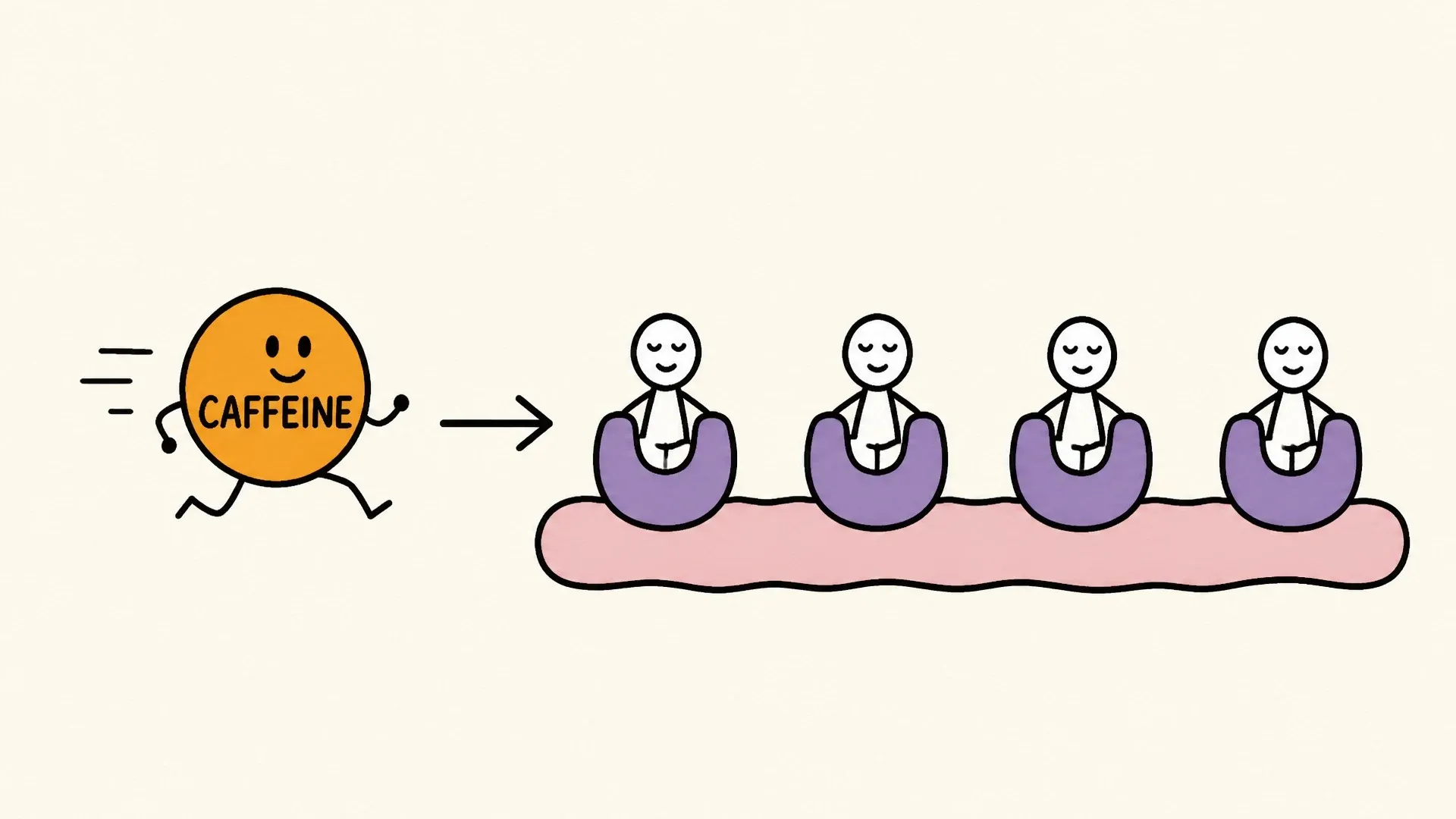
Caffeine fits into adenosine receptors without delivering adenosine’s sleep-promoting message, so part of the tiredness signal is temporarily muted.
Alertness is not the same as full recovery
Blocking adenosine changes activity in other signaling systems too, including dopamine, noradrenaline, acetylcholine, and glutamate. The practical result can be less subjective sleepiness and better resistance to monotonous work. Studies of sleep-deprived people commonly find improvements in vigilance, attention, reaction time, and some kinds of physical or occupational performance.
Those benefits matter. A person who must stay watchful through a dull task may genuinely perform better after caffeine. But performance is not one dial. Complicated judgment, working memory, emotional control, and flexible decision-making do not necessarily recover to the same degree. Feeling capable can return before every relevant ability does.
That distinction is easy to miss because we experience our own confidence directly. If the fog lifts, we may assume the underlying impairment has lifted with it. Caffeine therefore deserves neither dismissal nor magical status: it is a useful stimulant with a specific mechanism, not portable replacement sleep.
The crash has more than one cause
As the body metabolizes caffeine, adenosine receptors become available again and the muted pressure is easier to feel. That can contribute to a “crash,” but the familiar slump is rarely a single chemical event. It may combine rising sleep pressure, a normal circadian dip, caffeine withdrawal in a habitual user, dehydration or hunger, and the rapidly absorbed sugar that accompanied the drink.
The important point is that caffeine did not manufacture the later tiredness from nothing. Much of it was already present. The stimulant changed when and how strongly it was noticed.
Regular use adds tolerance. The brain adapts to repeated exposure, so yesterday’s dose may become less noticeable. Stopping abruptly can then cause headache, drowsiness, irritability, and poor concentration. For a daily user, the first cup can both provide stimulation and reverse early withdrawal. That makes comparisons between regular users and infrequent users less simple than “coffee works” or “coffee does nothing.”
Today’s rescue can reach tonight’s sleep
Caffeine is cleared over hours, not minutes. Its half-life varies considerably, so an afternoon dose can still be active at bedtime. A person may take longer to fall asleep, sleep for less time, wake more often, or spend less time in deep non-REM sleep. Falling asleep successfully does not prove that the sleeping brain was unaffected.
A 2025 study comparing 200 milligrams of caffeine with placebo in 40 healthy adults found more complex, activated electrical patterns during sleep, especially in non-REM sleep. The sample was small and those EEG measures should not be translated into a sweeping health verdict. They do reinforce a narrower conclusion: caffeine can alter brain activity after consciousness has faded.
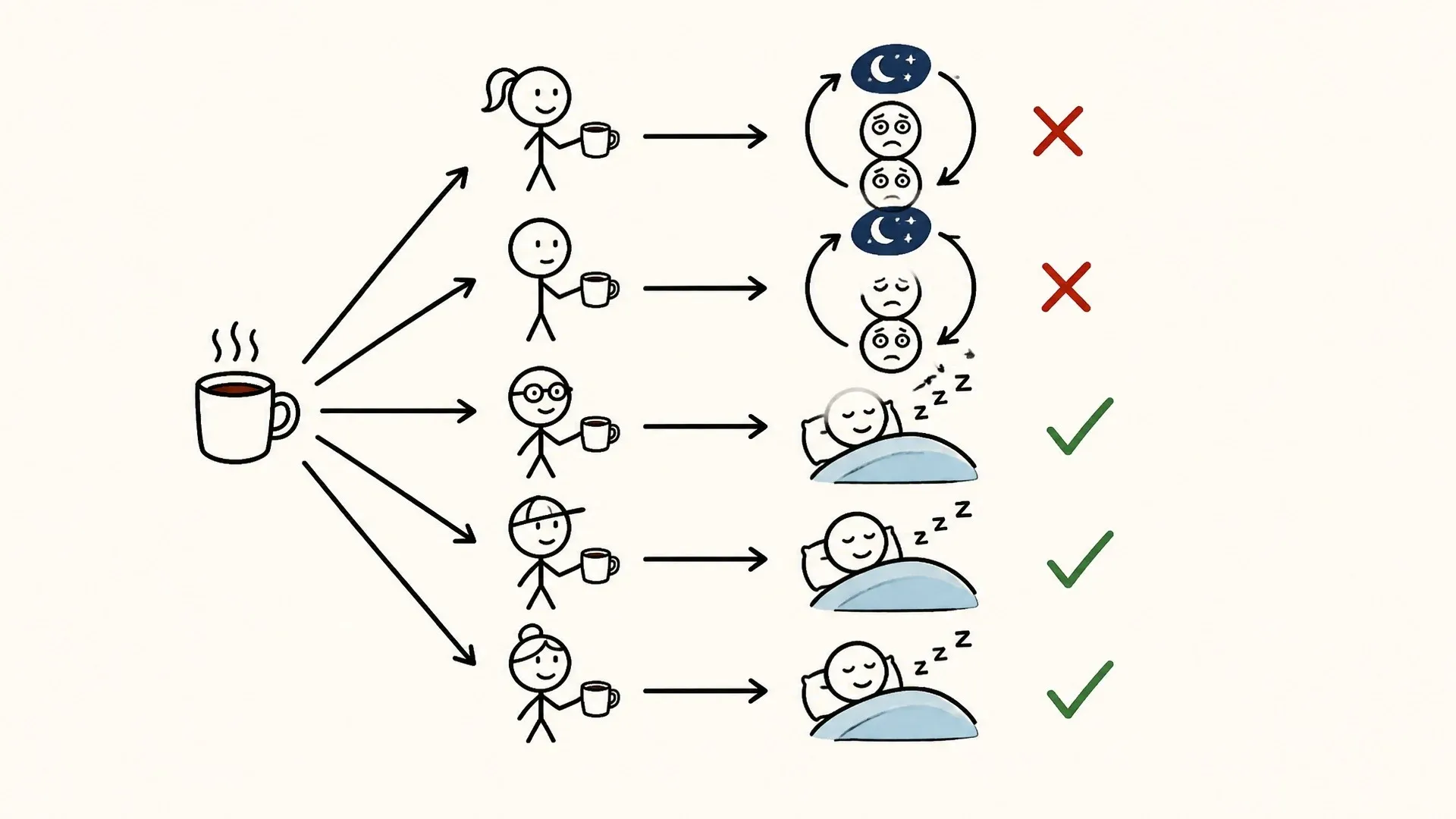
The same cup can affect people differently, but late caffeine can turn short sleep and next-day dosing into a repeating loop.
This creates a recognizable feedback loop. A short night leads to more caffeine; enough of that caffeine persists into the next night; sleep becomes shorter or lighter; the following day begins with a larger need for stimulation. Caffeine is managing a symptom that the caffeine-assisted schedule may now help maintain.
There is no universal coffee clock
Advice to wait exactly 60 or 90 minutes after waking sounds satisfyingly precise, but physiology has not issued a single stopwatch. Delaying a first dose may help someone reduce total intake, avoid an automatic habit, or move the final dose farther from bedtime. Another person may need alertness sooner. The useful question is not whether a ritual follows one official minute; it is whether the timing improves the whole day without degrading the night.
Individual differences are substantial. Dose, body size, pregnancy, smoking, medication, age, habitual intake, and genetics can all change the response. Variants involving the CYP1A2 enzyme influence how quickly caffeine is metabolized, while variation in adenosine-receptor genes can affect sensitivity to anxiety and disrupted sleep.
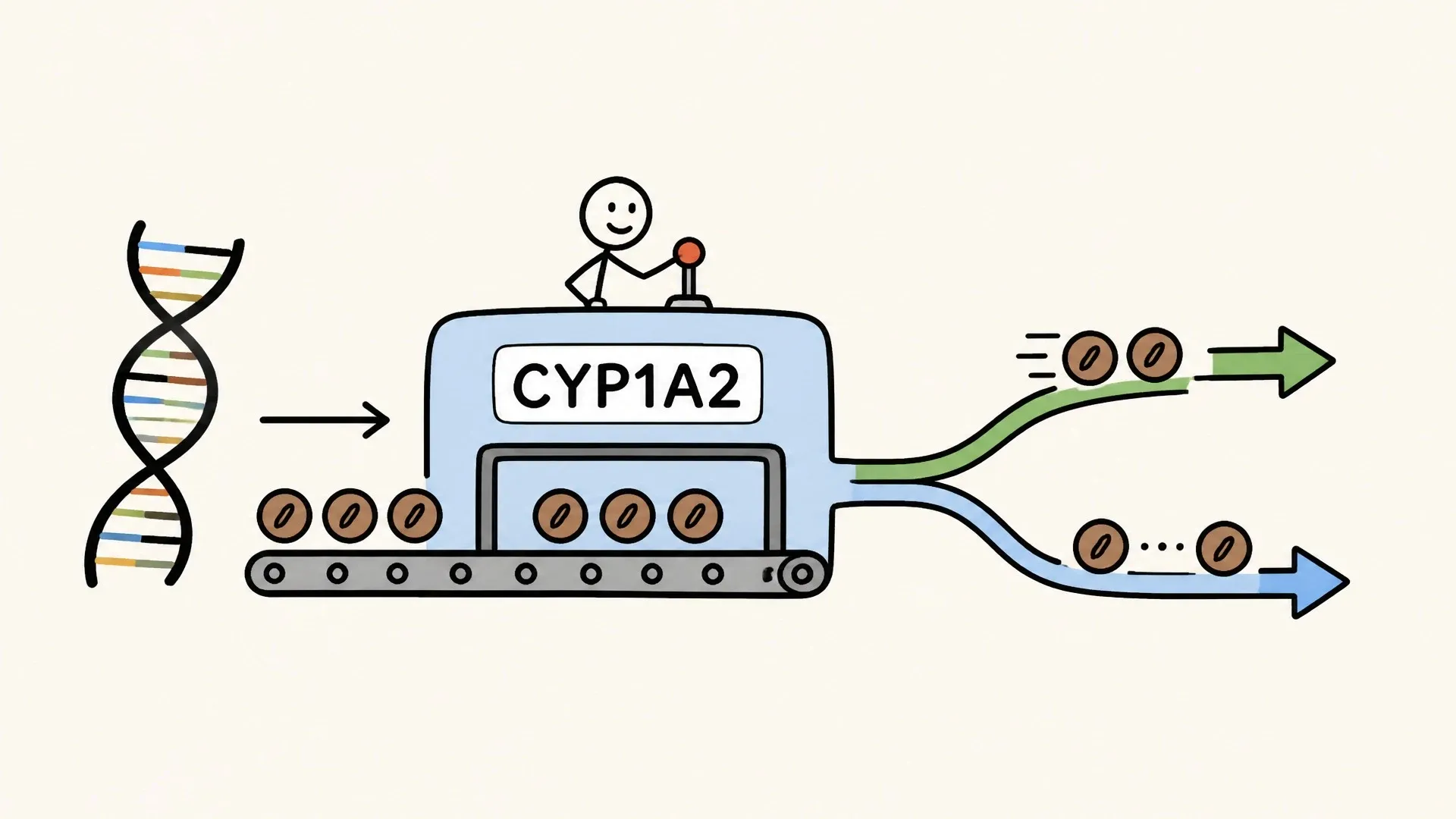
Variants affecting caffeine metabolism are one reason two people can clear the same dose at different rates.
Personal observation is therefore more useful than a universal cutoff. Note the dose and time, but also how long it takes to fall asleep, whether sleep breaks repeatedly, how rested the morning feels, and whether more caffeine is needed merely to feel normal. Changing one variable for several days reveals more than judging one unusually stressful night.
Caffeine can keep the lights on. It cannot perform the memory consolidation, emotional regulation, immune work, metabolic regulation, and neural reorganization that happen during sleep. Used deliberately, it is a valuable tool. Used as proof that tiredness no longer matters, it hides the invoice while the balance remains due.


