Short answer
The answer in plain English
Use a three-part bridge: name the useful pattern in your past work, state the role you are moving toward, and give concrete proof that the transition is already underway. End by connecting that evidence to this employer’s needs.
Why it matters
What to understand
Career changers often spend too much of this answer explaining why they want to leave. A stronger response translates earlier work into a relevant pattern, names a specific target, and supports the move with evidence such as an adjacent project, portfolio, training applied in practice, or measurable result. The employer should not have to infer the connection.
Visual guide
How the pieces fit together


Build the connection for the interviewer
When you are changing careers, “Tell me about yourself” is not an invitation to justify every step that led to the switch. The interviewer needs a shorter, more practical story: which parts of your previous work matter here, what you are moving toward, and what shows that the move is more than an idea.
A useful answer follows a three-part bridge: past pattern, current target, and proof of transition. Add one final sentence about this employer. The structure lets you acknowledge the old career without allowing it to dominate the answer.
This focus matches how interviews are used to assess job-related evidence. The U.S. Office of Personnel Management describes structured interviews as questions about past behavior or responses to work situations, designed to measure competencies. Even when the opening question is broad, the useful material is still evidence the employer can connect to the role.
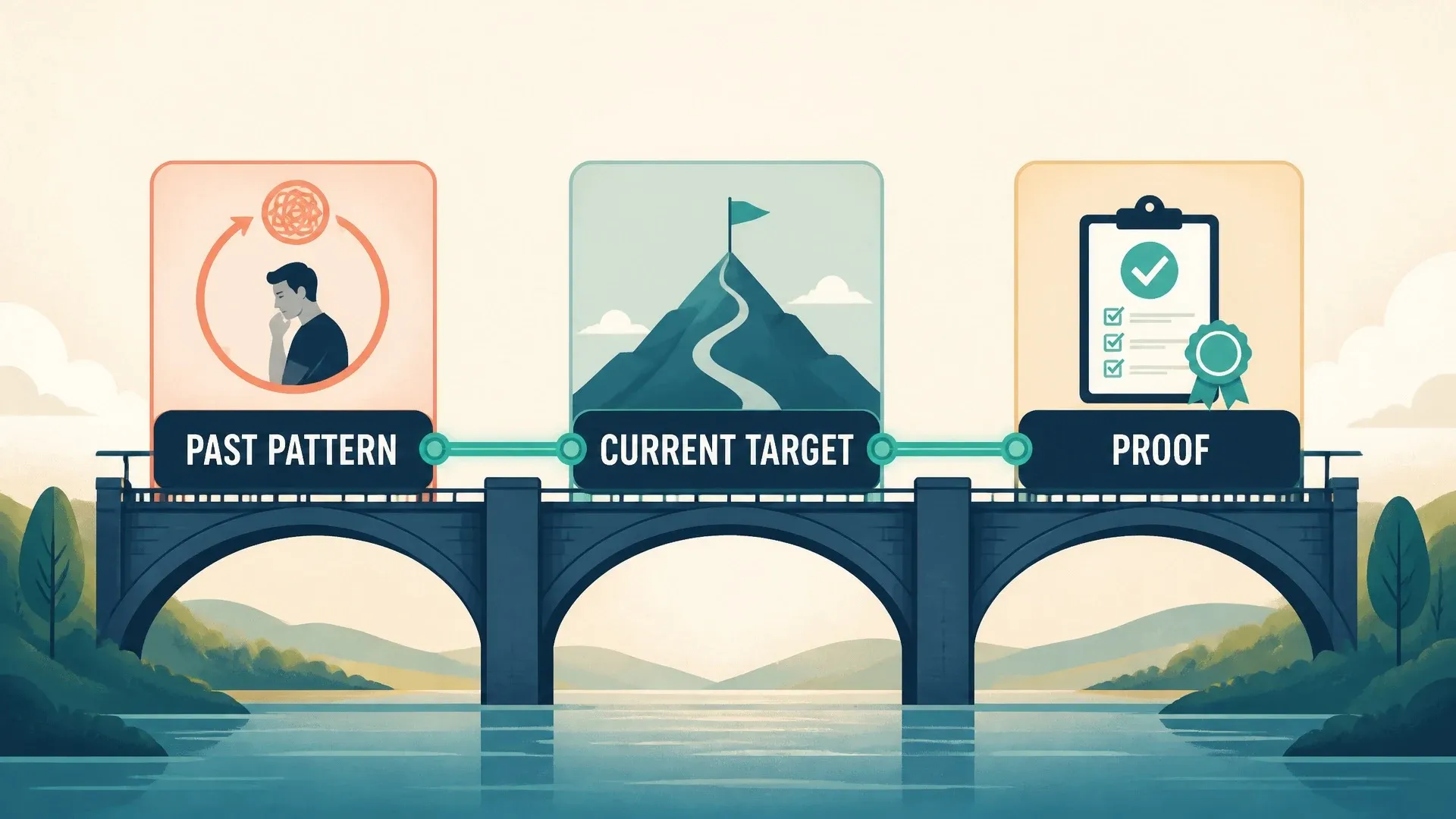
The bridge answer has three parts: translate the past, name the target, and prove that the move is already underway.
1. Find the pattern beneath your old title
Do not begin with your complete chronology. Identify the kind of problem you have handled repeatedly.
A teacher may have helped people understand unfamiliar information, adopt tools, and stay engaged when they were frustrated. A retail operations manager may have used sales, inventory, staffing, and customer data to find causes of recurring problems. A journalist may have researched unfamiliar subjects, interviewed specialists, and turned complexity into clear writing.
These descriptions are stronger than personality labels. “I am a people person” asks the interviewer to trust a claim. “I spent eight years guiding people through unfamiliar processes and resolving problems when adoption stalled” describes work that can be examined.
Choose a pattern that actually appears in your experience and matters in the vacancy. If you need a fuller method for selecting evidence, our guide to answering questions about your work experience explains how to combine scope, proof, and role fit without reciting a résumé.
2. Name the target precisely
“I want to try something new” leaves the employer with two doubts: whether you understand the role and whether the choice will last. Name the target and the work within it.
Compare these two sentences:
- “I am looking for a new challenge in customer success.”
- “I am moving into customer success roles where I can apply that experience to user onboarding, product adoption, and relationship management.”
The second version shows that the candidate understands the job beyond its title. It also creates a clear test for the past pattern: does the earlier experience support any of those responsibilities?
Tailor the wording to the vacancy. If the job emphasizes customer reporting, foreground an example of explaining findings to nontechnical colleagues. If it emphasizes process improvement, choose evidence that led to a better workflow. Relevance comes from selection, not from listing every strength.
3. Prove that the transition has started
Proof reduces the uncertainty attached to a career change. It can come from an adjacent responsibility in your current job: introducing a tool, training colleagues, documenting a process, analyzing a recurring problem, or working with the team you want to join.
It can also come from a realistic portfolio project, volunteer work, freelance work, or applied training. The important word is applied. “I completed a data analytics course” reports attendance. “I cleaned a public dataset with SQL, documented my assumptions, and built a dashboard that explains the result” gives the interviewer something concrete to discuss.
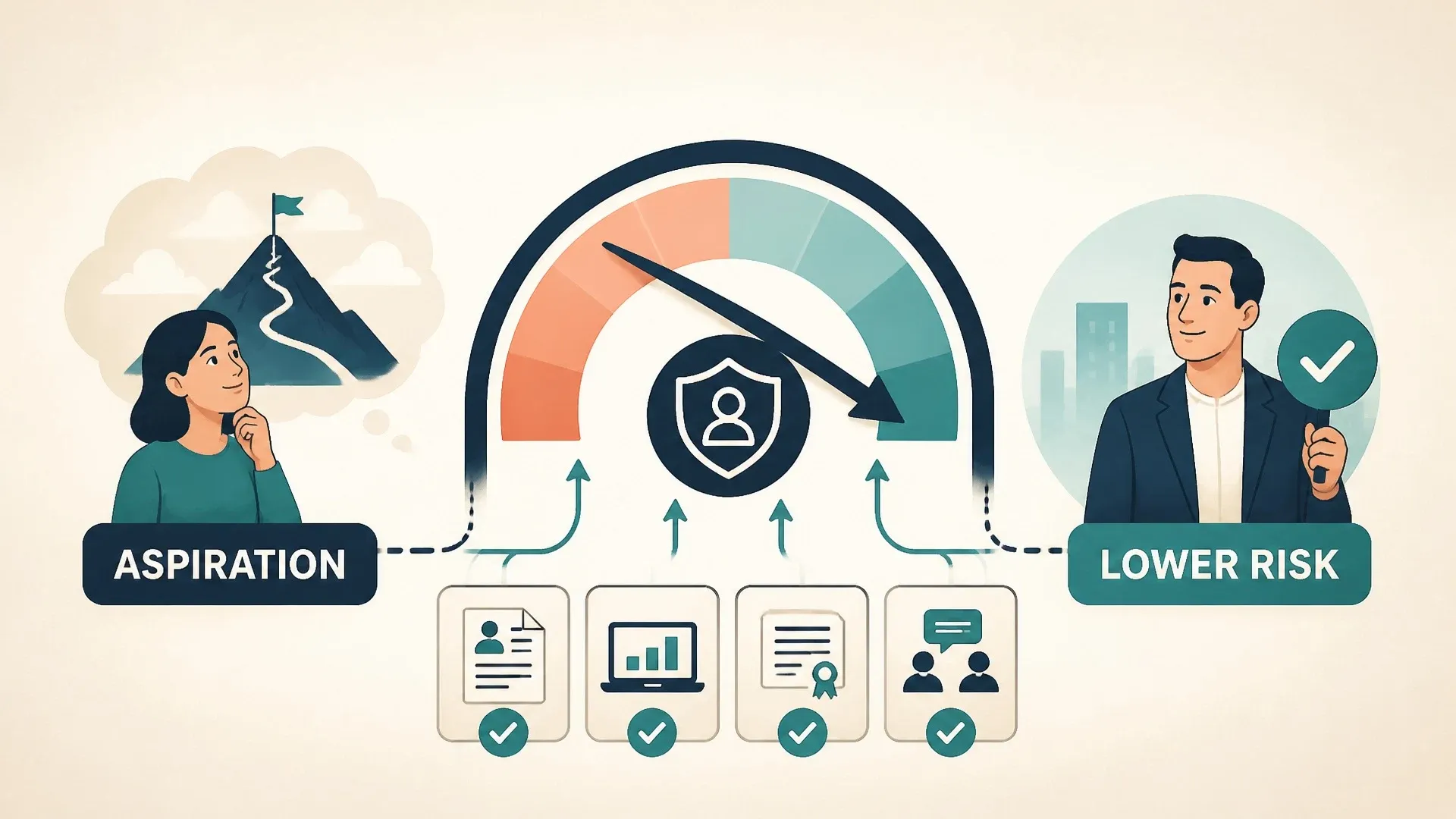
Proof turns a hoped-for career change into a hiring decision supported by work the candidate has already done.
Never invent a project, inflate your role, or present a certificate as automatic proof of job readiness. A modest example you can explain under follow-up questioning is safer than a polished claim that collapses when the interviewer asks what you personally did.
A compact example
A teacher moving into customer success might say:
“For the past eight years, the consistent theme in my work has been helping people understand complex information, adopt new tools, and stay engaged when they are frustrated. I became especially interested in the technology side after helping my team introduce a learning platform, where I created onboarding guides, trained colleagues, and gathered feedback. I am now moving into customer success roles focused on onboarding and product adoption. I have also built a sample onboarding plan for a software product, and this position stood out because it combines client communication with the structured problem-solving I have already been doing.”
The answer does not hide teaching. It translates the work, names the new direction, adds proof, and explains why the vacancy fits. It also avoids spending the opening minute criticizing the old career. If the reason for leaving is likely to become a separate question, prepare it independently with the context-learning-fit structure.
Keep it concise, then make it sound human
The University of Pennsylvania Career Services recommends a clear past-present-future structure and notes that a focused answer often fits within roughly 30 to 90 seconds. For a career changer, the bridge structure adapts that sequence by giving transition proof its own job.
Write a complete version first. Then reduce it to four verbal landmarks:
- What useful pattern have I repeated?
- Which role and responsibilities am I targeting?
- What have I already done to prepare?
- Why does that evidence matter here?
Practice from those landmarks rather than memorizing every sentence. Harvard’s interviewing guidance makes the same distinction: practice helps you assess whether explanations are clear and connected to your experience; it does not require a memorized script.
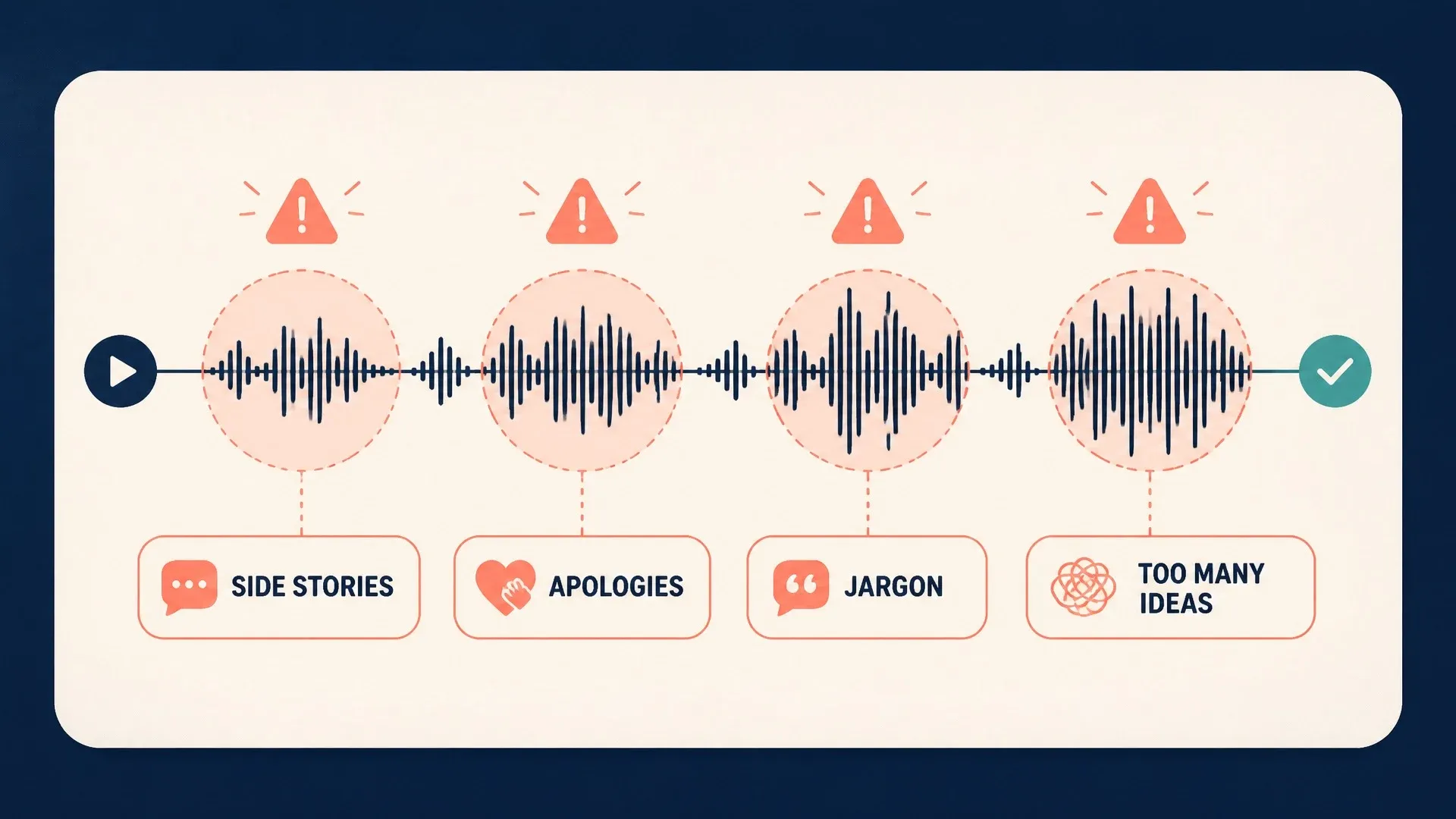
Recording one practice answer makes clutter audible and helps preserve the structure without memorizing a script.
Record one attempt and listen for detours, apologies, jargon, and sentences carrying several ideas at once. Remove any detail that does not explain your pattern, target, proof, or fit. The final test is simple: after hearing the answer, should a hiring manager understand what risk you reduce for the team? If not, the answer needs clearer evidence—not a longer autobiography.

