Short answer
The answer in plain English
What comes after GPT is likely not one all-purpose model, but a stack of connected parts. A foundation model supplies language and reasoning; an agent loop chooses actions; tools reach external systems; persistent memory retrieves relevant history; multimodal components process images, audio, and video; and smaller models handle routine work. The opportunity is longer, more useful workflows. The risk is that model errors can become real actions.
Why it matters
What to understand
AI is shifting from isolated answers toward systems that can observe a task, choose tools, act, check results, and continue. Persistent memory can carry useful context between sessions, while multimodal models broaden what the system can perceive. Smaller local models and selective cloud routing can make repeated inference more practical. These parts also introduce separate failure modes, so permissions, memory controls, verification, and escalation rules matter as much as benchmark scores.
Visual guide
How the pieces fit together


The successor is a system, not a model number
Asking what comes after GPT sounds like asking which model will replace the current one. That may be the wrong unit of analysis. The more consequential change is happening around the model: software is giving it tools, durable memory, additional senses, and the ability to continue working after the first answer.
A foundation model still matters. It interprets language, proposes steps, and handles unfamiliar cases. But a capable assistant increasingly looks like a collection of parts with different jobs. The result is less like a chatbot that knows more facts and more like a small operating system for AI-assisted work.
That shift changes the questions worth asking. Accuracy still matters, but so do permissions, the quality of saved information, the cost of repeated model calls, and the damage a failed action could cause.
An agent adds a loop around the model
A language model produces an output from an input. An agent uses that output as one step in a continuing process. It can inspect a goal, choose a tool, perform an action, observe what happened, and decide whether to continue. IBM’s overview of AI agents describes this broader combination of reasoning, planning, memory, tools, and action.
Imagine arranging a business trip. A chatbot can suggest an itinerary. An agent could search live options, compare them with a calendar and company policy, draft a schedule, and pause before anything is purchased. It does not need airline schedules encoded in its model weights. It needs controlled access to a service that can retrieve them.
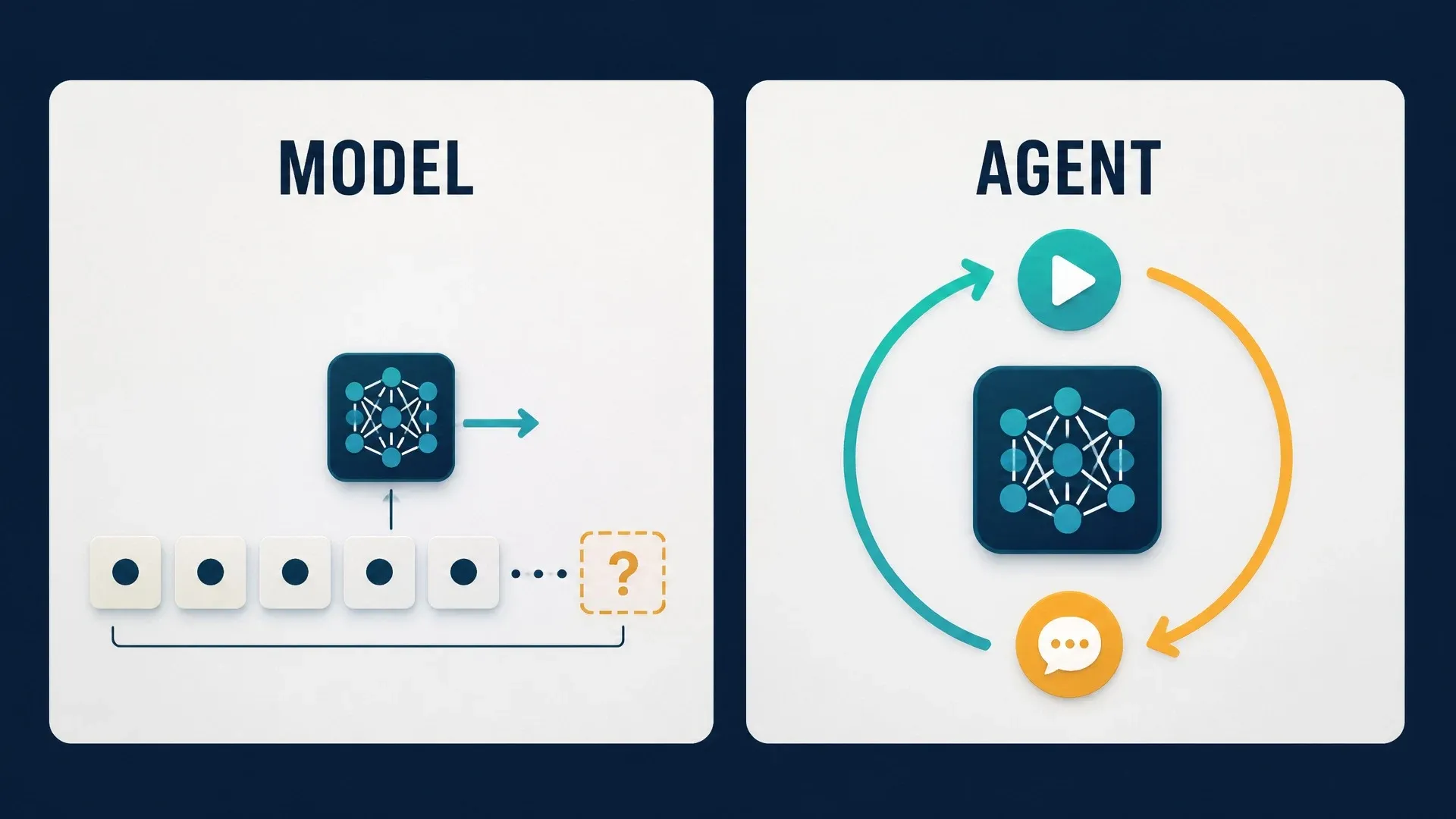
A model can propose the next step; an agent adds software that performs the step, returns the result, and repeats the cycle.
The loop is useful because the system can react to new evidence. It is risky for exactly the same reason. A chatbot that invents a flight time gives bad information. An agent that trusts the invented time and edits a calendar creates a real consequence. Access should therefore be narrow, sensitive actions should require approval, and the system should keep a record of what it changed.
Persistent memory is not a bigger context window
A context window is temporary working space. It lets a model consider documents and conversation while handling a request, but that material may disappear when the session ends or be displaced as the window fills.
Persistent memory is stored outside the model and retrieved during later work. A useful assistant might remember a preferred report format or an ongoing project, then insert only the relevant details into the current context. This usually does not mean retraining the underlying model on one person’s history.
Selection is the hard part. Saving everything is expensive, distracting, and invasive. Saving too little makes the system forgetful. Saving the wrong inference can turn a guess into a recurring false premise. Research represented by the Mem-Gallery benchmark examines precisely this challenge for long-term multimodal conversations: storing information is not the same as organizing, updating, and reasoning over it reliably.
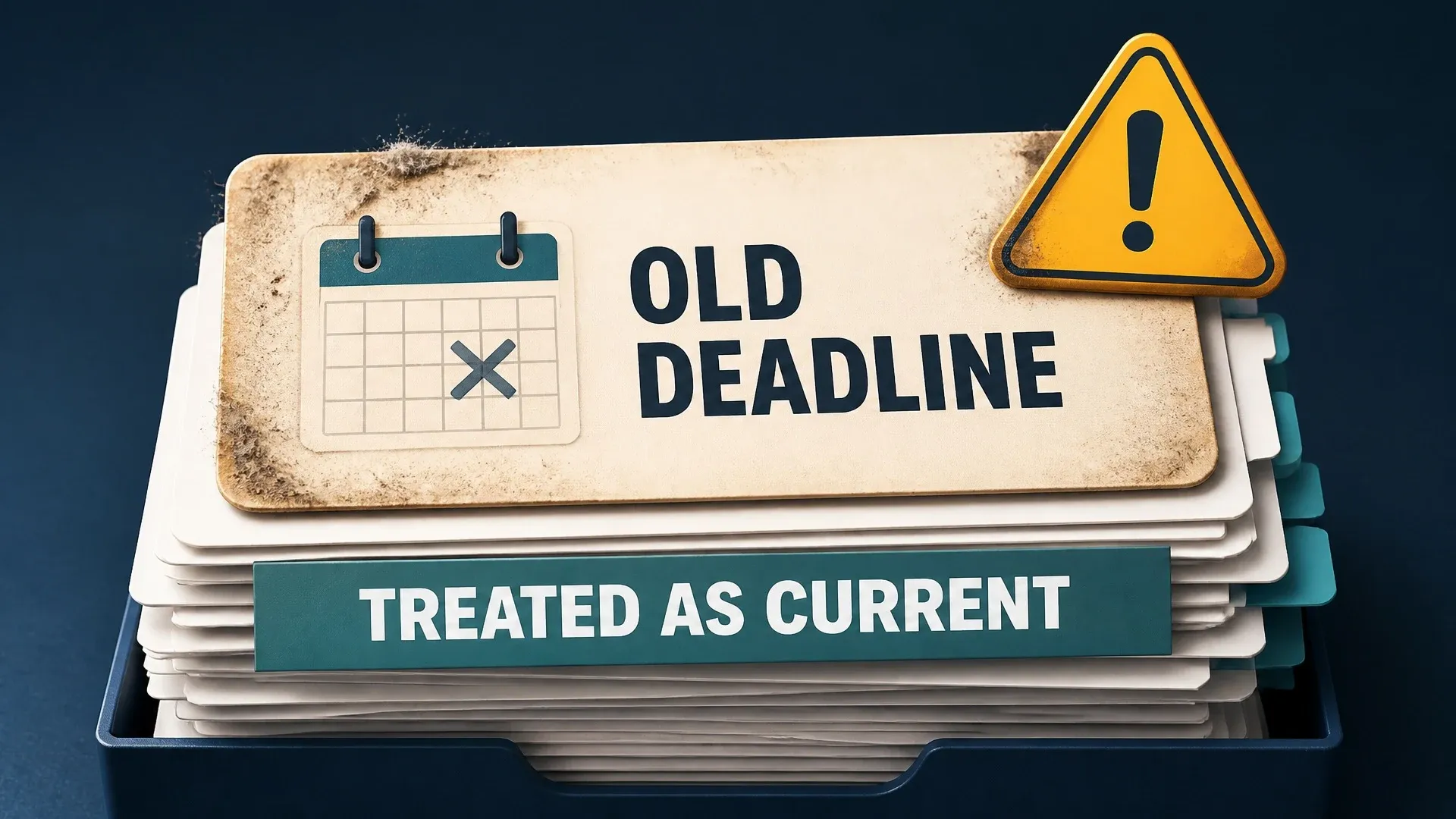
Persistent memory needs freshness rules: retrieving an obsolete deadline can be more harmful than retrieving nothing.
Good memory therefore needs provenance and expiry, not merely capacity. Users should be able to see what was saved, correct it, and delete it. New information must be able to replace an outdated deadline instead of sitting beside it as an unresolved contradiction.
Multimodal input expands perception, not certainty
Multimodal AI works across combinations of text, images, audio, and video. Different inputs are converted into numerical representations that a model can process together. That can let an assistant connect a spoken question with an object in a camera view, compare a diagram with a written manual, or associate a decision in a meeting recording with a document.
More input does not guarantee a truer interpretation. A photograph shows one angle. A voice can be sarcastic. A recording may omit what happened immediately beforehand. A system can perform remarkably well on a specialized science task and still misread an ordinary clock—one example of the uneven ability described in Stanford’s 2026 AI Index.
This jaggedness matters more when perception feeds action. A mistaken caption is inconvenient; a visual misreading used to operate equipment can be dangerous. Multimodal agents need uncertainty checks and escalation rules tied to the consequence of being wrong.
Repeated inference changes the economics
Inference is the act of running a trained model to produce an answer or decision. A simple chatbot exchange may call a model once. An agent can call models repeatedly while it plans, searches, revises, and verifies. One visible request may become dozens of operations.
The most capable model is rarely the economical choice for every operation. A smaller model may be sufficient to classify a message, extract a date, or select the next tool. A larger model can be reserved for difficult reasoning. This routing approach makes the stack more affordable and can reduce delay.
The AI Index economy chapter notes that adoption is spreading while compute and infrastructure costs are also rising. On-device models add another option. They can reduce network delay, continue without a connection, and keep some data on a phone or laptop, although memory, battery, heat, and chip differences impose strict limits. Google Cloud’s on-device benchmarking guide illustrates why performance must be tested on actual devices rather than assumed from a model name.
A likely design is hybrid: routine work stays local, while harder cases move to a cloud model when the user permits it.
Benchmarks measure components, not the whole job
The 2026 AI Index reports a sharp improvement on OSWorld, a benchmark of computer tasks across operating systems, while still showing failure in roughly one out of three attempts. That is substantial progress and an obvious warning against unattended high-stakes use.
Longer benchmark horizons can also be misunderstood. METR’s task-completion time-horizon research measures performance on clean, scoreable tasks. Real jobs include ambiguous goals, relationships, institutional knowledge, shifting priorities, and outcomes that are difficult to grade. A benchmark can show that one capability improved without proving that an entire occupation is ready for automation.
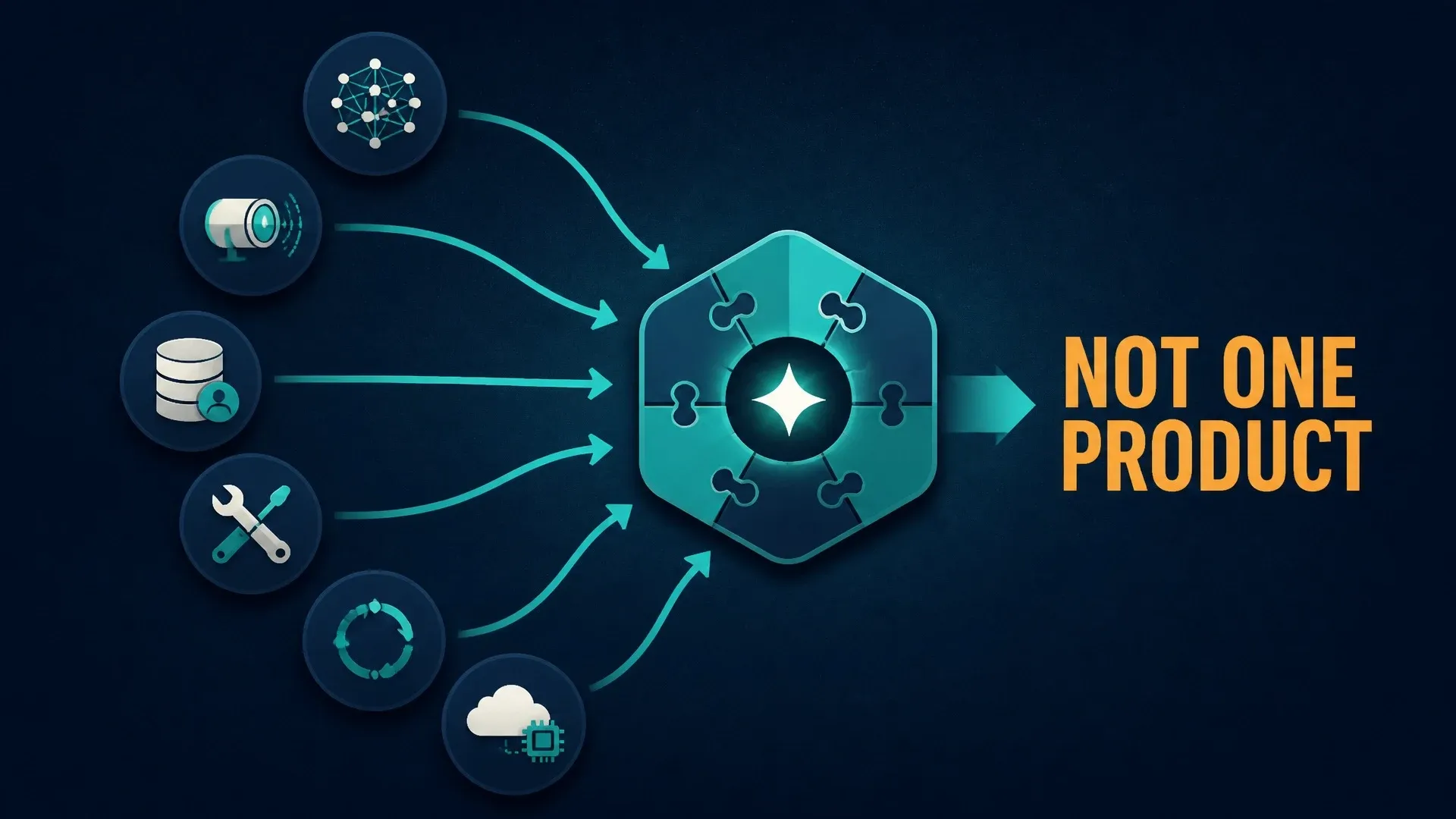
The successor to a standalone chatbot is likely to be a coordinated stack whose components can be improved and constrained separately.
The practical breakthrough will be coordination. A model supplies language and reasoning. Multimodal components broaden perception. Memory retrieves useful history. Tools connect the system to current information and software. An agent loop manages the sequence. Smaller models handle frequent, cheap work, and a larger model receives the difficult cases.
No single component makes that stack dependable. Reliability comes from how the boundaries are designed: what the agent may access, what it remembers, how it checks results, when it asks for approval, and how easily a person can stop or reverse an action. What comes after GPT is therefore not simply a more impressive answer box. It is a system that can act over time—and must be engineered so that small mistakes stay small.


