Short answer
The answer in plain English
Magic tricks and dramatic basketball plays feel similarly surprising because the brain continuously predicts what is likely to happen next. A trick violates beliefs about objects and causality; a game-changing shot violates an estimate of the likely outcome. Both create prediction error, recruit attention, and trigger model updating. The shared feeling does not mean every surprise has one identical brain signature—or that surprising information is true.
Why it matters
What to understand
Perception is partly predictive: the brain prepares for likely sensory events and outcomes. Surprise is the mismatch between that preparation and what arrives. Researchers have found distributed brain-network patterns that generalize across different surprising events, including magic and basketball clips. Context, expertise, emotion, and prior knowledge still shape the response, which is why spoilers can flatten an event without changing the event itself.
Visual guide
How the pieces fit together


Surprise is a prediction becoming visible
A magician closes a hand around a coin and opens it empty. A basketball team that looked beaten scores at the buzzer. The scenes share almost nothing physically, yet the gasp can feel remarkably similar. In both cases, reality has broken a prediction that was already active.
Perception is not a camera that waits passively for information. The brain uses context, recent events, and past experience to anticipate what is likely to arrive next. Those predictions help it prepare movements and allocate attention before every detail has been processed. Most of the time, the forecast is close enough that the machinery stays invisible.
Surprise exposes it. If the coin should still be in the hand or the trailing team should probably lose, the unexpected outcome produces prediction error: a mismatch between the prepared model and incoming evidence.
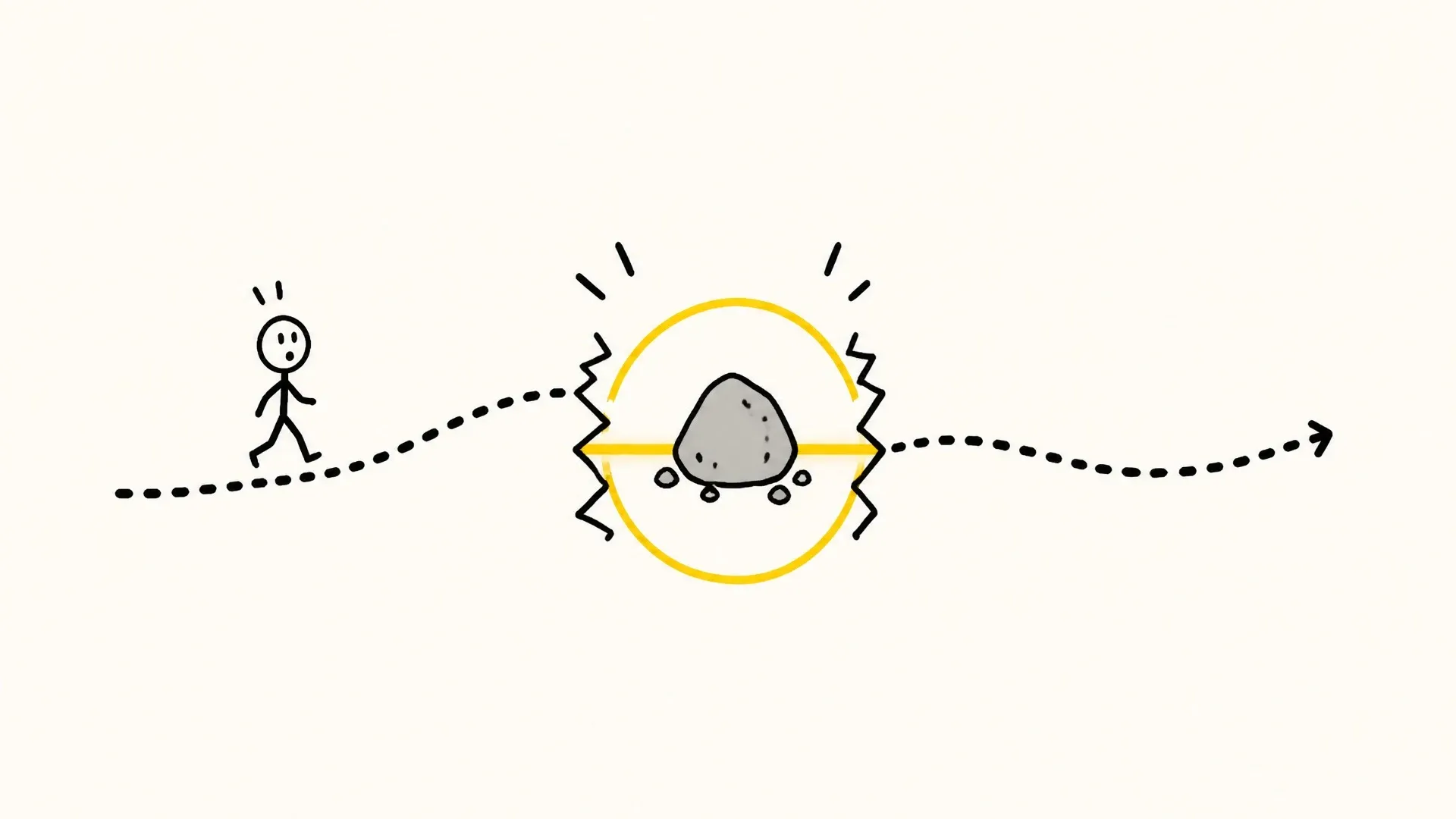
Magic and sport violate different kinds of belief
A magic trick attacks beliefs about objects, causes, and physical continuity. The audience sees a sequence engineered to support an ordinary explanation, while the method remains hidden. The effect feels impossible because the visible evidence conflicts with a strong rule: objects do not vanish without going somewhere.
Basketball surprise is usually probabilistic rather than physically impossible. Score, time, possession, player quality, and game state continuously shift the chance of each team winning. A routine basket early in a game changes little. The same shot with one second left can reverse the expected outcome.
This difference matters. Surprise is not identical to rarity. An unlikely event can be unsurprising if we were warned about it, and an objectively common event can startle us when it violates the local context. What matters is the observer’s model immediately before the event.
Researchers looked for a reusable network pattern
A study published in Nature Human Behaviour asked whether different surprising experiences share a distributed neural pattern. Rather than looking for one “surprise center,” the researchers used existing fMRI datasets and tracked how activity across pairs of brain regions changed together from moment to moment.
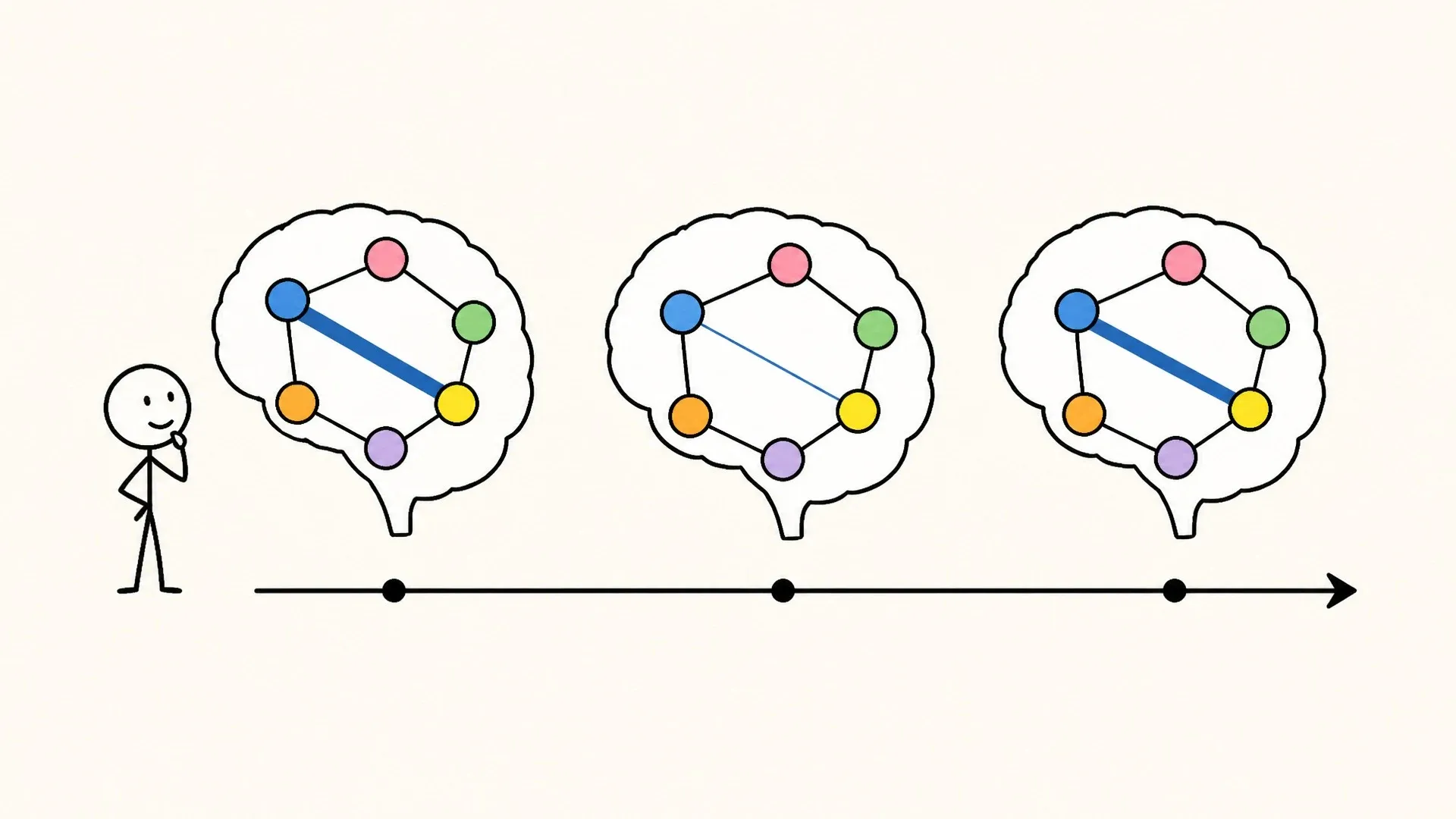
They trained a model on some kinds of surprising events and tested whether it generalized to others. The resulting network pattern tracked surprise across varied material, including belief-inconsistent magic tricks and basketball moments. For games, surprise could be related to changes in win probability after possessions.
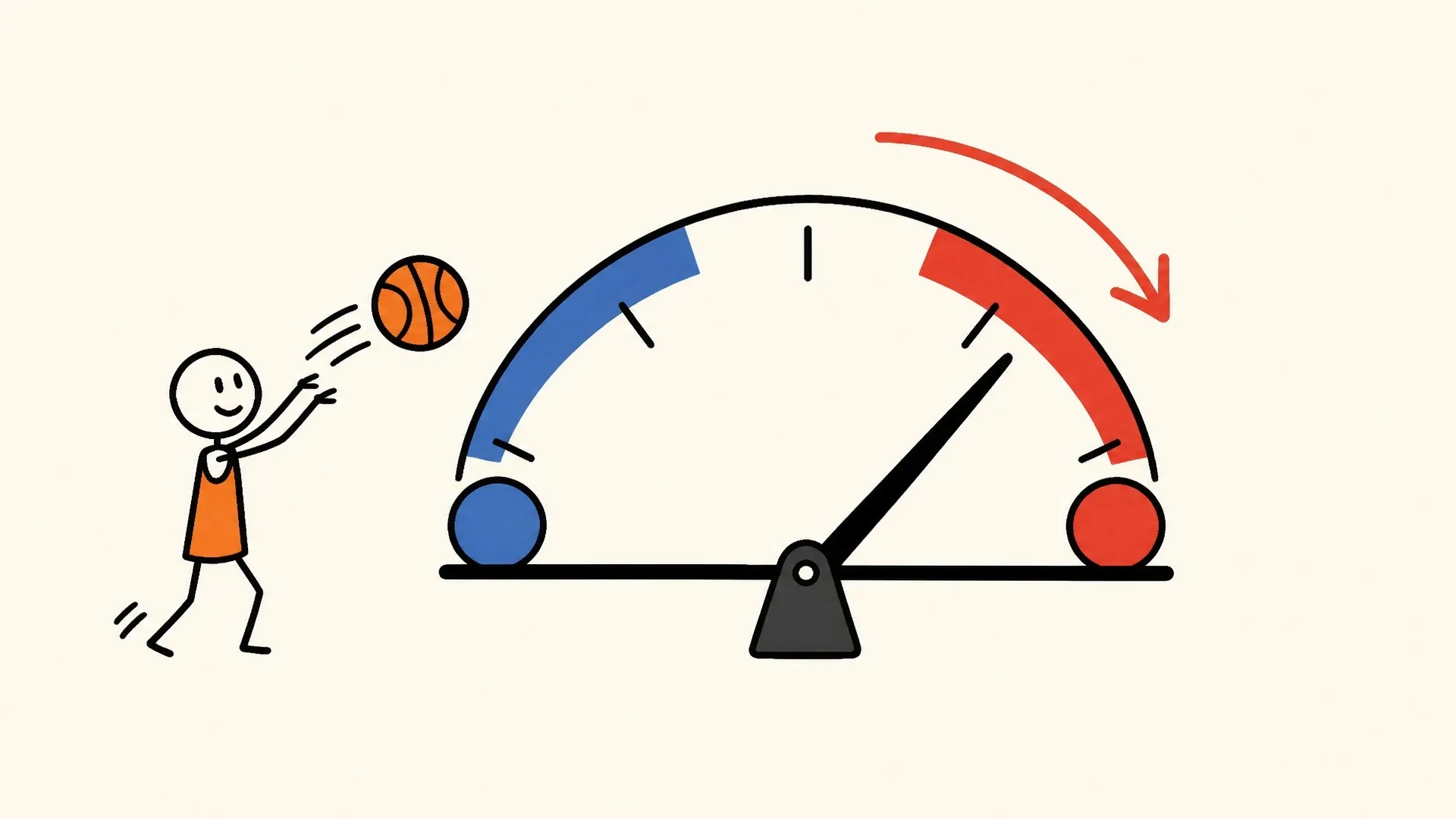
Generalization is the interesting result, but it should not be overread. It does not prove that every gasp, joke, plot twist, or scientific discovery produces one identical neural state. Brain imaging measures indirect signals at limited spatial and temporal resolution. A distributed pattern can carry information across contexts while each experience also recruits systems related to vision, movement, memory, emotion, and personal meaning.
Prediction errors reorganize attention
A mismatch tells the brain that its current model may need revision. Attention shifts toward the unexpected detail. Memory can strengthen around it because the event contains information that the existing prediction failed to capture. Curiosity often follows: if the outcome does not fit, what hidden cause would make it fit?
This is why surprise is useful for learning. A perfectly predicted event offers little reason to update. A prediction error identifies the point where knowledge or context is incomplete. Research on prediction error and attention describes how unexpected outcomes can alter what receives processing during learning.
The update is not always conscious. In a magic show, attention may snap to the empty hand before the viewer can state which assumption failed. During a game, the body may react to a shot while conscious estimates lag behind the rapidly changing situation.
The observer helps create the surprise
Expertise can reduce surprise by making a pattern predictable. A trained magician notices a suspicious gesture; an experienced fan recognizes the play forming. Expertise can also intensify surprise when a rare violation defeats an unusually precise expectation.
Spoilers work by changing that expectation. The scene and shot remain the same, but the brain meets them with a different model. Suspense may survive because timing and execution remain uncertain, yet the large update has already been spent.
Emotion changes the stakes as well. A neutral viewer and a devoted supporter can calculate the same win-probability shift while experiencing very different urgency. The underlying mismatch is only part of the full feeling.
Surprising is not the same as true
Online headlines exploit prediction error because shock wins attention. A strange claim can force an update signal before evidence has been evaluated. Surprise says that the current model and the incoming information conflict; it does not tell us which one is wrong.
A good magic trick is a safe, engineered model failure. A dramatic basketball finish is an unscripted probability reversal. Both feel alike because, for a moment, the world refuses the path prepared for it—and the brain has to rewrite what comes next.


