Short answer
The answer in plain English
Moving in sync can make strangers feel closer because successful coordination combines shared attention, mutual prediction, and evidence of a common goal. Similar sensory and movement patterns may also increase perceived similarity, while energetic activity adds arousal. Experiments often find greater affiliation after synchrony, but effects vary and cohesion does not guarantee cooperation or kindness to outsiders.
Why it matters
What to understand
Interpersonal synchrony appears in marching, dancing, rowing, chanting, walking, and conversation. Matching another person's timing requires continuous monitoring and adjustment, making the partner's next action more predictable and producing a small, embodied success together. That can support closeness and group identity. Research also shows important limits: expectations can inflate findings, bonding and cooperation are not identical, and a cohesive group can still exclude outsiders.
Visual guide
How the pieces fit together


Shared timing gives the brain evidence of togetherness
At the start of a group fitness class, twenty strangers may behave like separate islands. Once the music begins, they squat, step, and lift their arms on the same beat. Half an hour later, the room often feels more social even though the participants have learned almost nothing about one another.
The effect is not mysterious friendship powder. Coordinated movement gives the brain several signals at once: other people are attending to the same event, their next actions are becoming easier to predict, everyone is contributing to a small common goal, and the body may be sharing exertion and arousal with the group. Together those signals can increase affiliation and cohesion.
Researchers call the broader phenomenon interpersonal synchrony. It includes people aligning movements, sounds, or physiological rhythms in time. Soldiers march, rowers match strokes, worshippers chant or sway, dancers follow a beat, and sports fans jump together. Two people walking side by side may gradually match pace without discussing it.
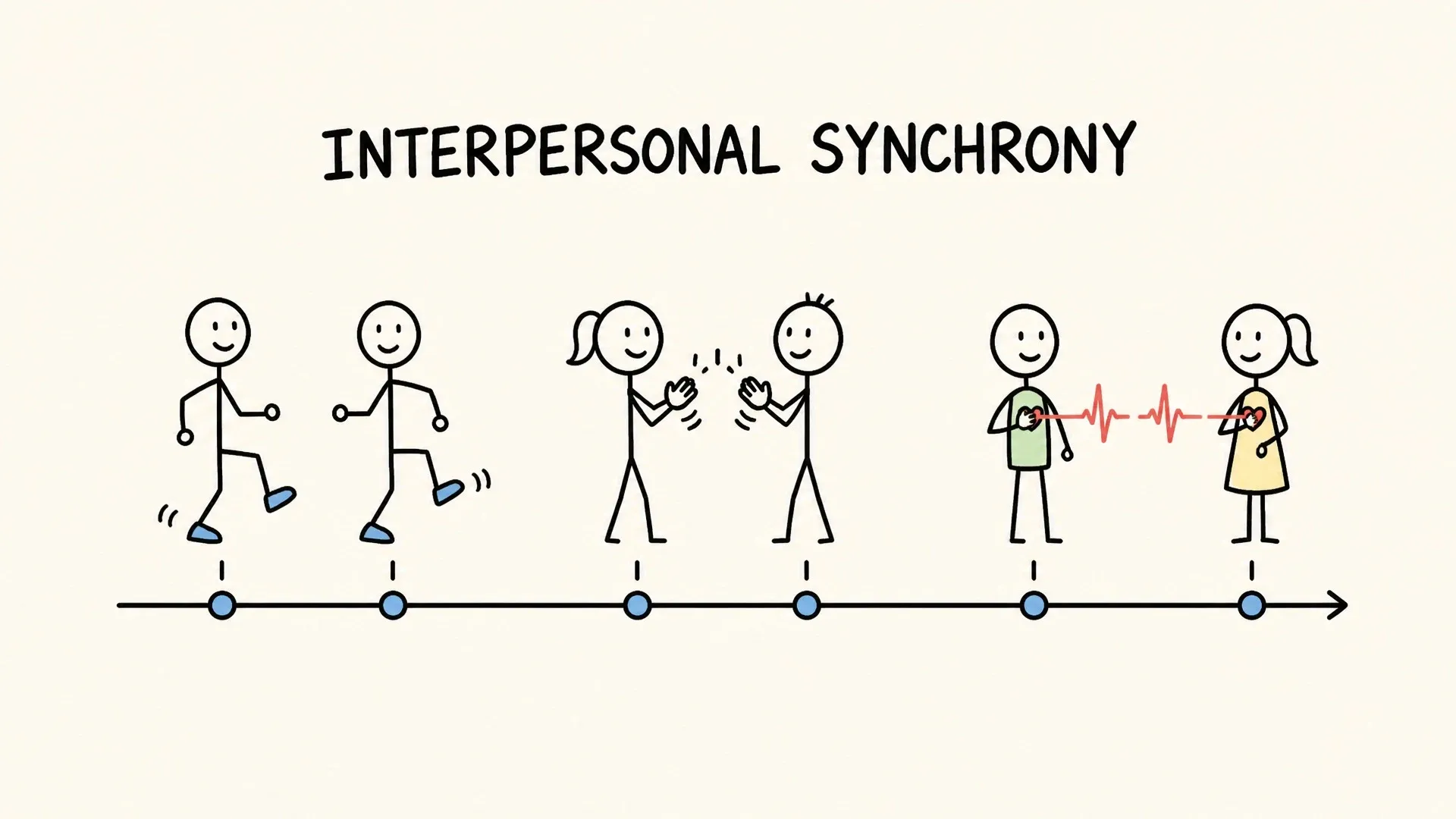
Sometimes connection produces synchrony: friends and engaged conversation partners often coordinate gestures, nods, posture, and speech rhythm. The more interesting possibility is the reverse. Can deliberately creating synchrony help create connection?
Coordination is a miniature cooperation problem
To clap with another person, the brain must do more than send a command to the hands. It monitors the partner, estimates when their hands will meet, compares that prediction with its own movement, detects error, and adjusts the next clap. Successful timing temporarily builds the other person into one’s own action plan.
Other people normally carry uncertainty. They can speed up, hesitate, misunderstand, or turn in an unexpected direction. During smooth synchrony, that uncertainty falls. Each partner becomes more predictable while also helping make the pattern predictable for the other. The social world briefly feels easier to model.
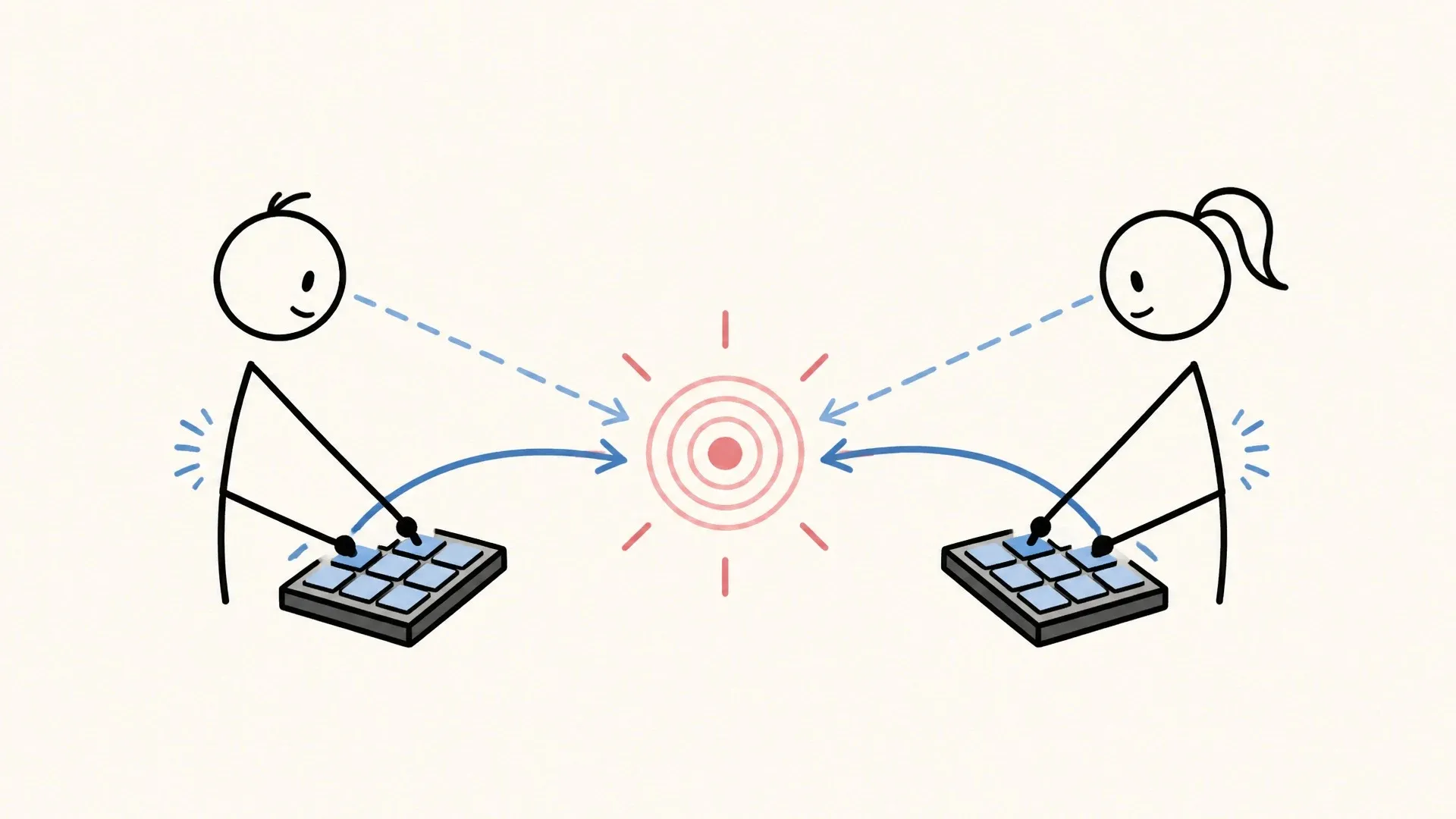
Every successful cycle is also evidence of shared attention. If we maintain a beat, we are both investing effort in the same tiny outcome. The movement says, in physical form, that I am responding to you and you are responding to me.
Exact imitation is not required. Partner dancers may move in opposite directions. Rowers occupy different positions but contribute complementary forces. Coordinated rhythmic action can support a joint pattern even when bodies do not perform identical motions at identical instants. Togetherness may come from participating in one system, not from becoming copies.
Similar movement can soften the line between me and we
The brain normally distinguishes self-produced action from outside events. Repeatedly matching someone else creates unusually similar sensory patterns: both people see related movements, hear shared impacts, and feel the same pulse of timing. Researchers sometimes describe the resulting perception as self-other overlap.
That phrase does not mean participants forget which body belongs to them. It means the other person may feel slightly more similar, more connected, or more naturally included in a temporary “we.” Humans often respond warmly to signs of shared language, taste, habit, or identity. Synchrony creates a small form of similarity in real time, before strangers know whether they agree about anything else.
Experiments have asked people to walk, tap, bounce, sing, dance, or perform simple movements together or out of time. Across many studies, synchronized groups report more closeness or affiliation. Some studies also find later increases in helping, trust, or cooperation. A meta-analysis found an overall prosocial association, while also showing that designs and outcomes vary.
Exertion may add another bonding signal
Many group rituals are energetic. Marching elevates heart rate; rowing and dancing demand effort; chanting changes breathing. A large field experiment in a stadium separated synchrony from physical arousal and linked both with measures of cohesion and cooperation. Some of its strongest patterns appeared when coordinated movement was also more activating.
Dance experiments have reported higher pain thresholds after synchronized, strenuous movement. Researchers sometimes use that response as an indirect sign of endorphin-system activity because endorphins participate in pain regulation and reward. It is a plausible bridge between exertion and bonding, but it is not a direct view of a single “friendship chemical.” Attention, prediction, shared goals, similarity, arousal, and cultural meaning may all contribute.
Sensitivity to shared timing also appears early. Studies with infants and young children suggest that moving in time with another person can affect later helping. Long before children can explain group identity, caregivers rock, bounce, sing, imitate sounds, and take conversational turns with them. Human connection begins with a great deal of coordinated timing.
The evidence has real limits
Not every study finds the same effect, and some influential experiments used small samples or procedures vulnerable to expectation. If a researcher knows who completed the synchronous condition, subtle differences in instruction or response may influence participants. Later work has warned that experimenter expectations can make synchrony-prosociality findings look stronger than they are.
Outcomes also do not move together automatically. In one synchronized dance study, people reported more bonding and showed increased pain thresholds without becoming more cooperative in a later economic game. Feeling close, tolerating discomfort, trusting someone, and sharing resources are different measurements.
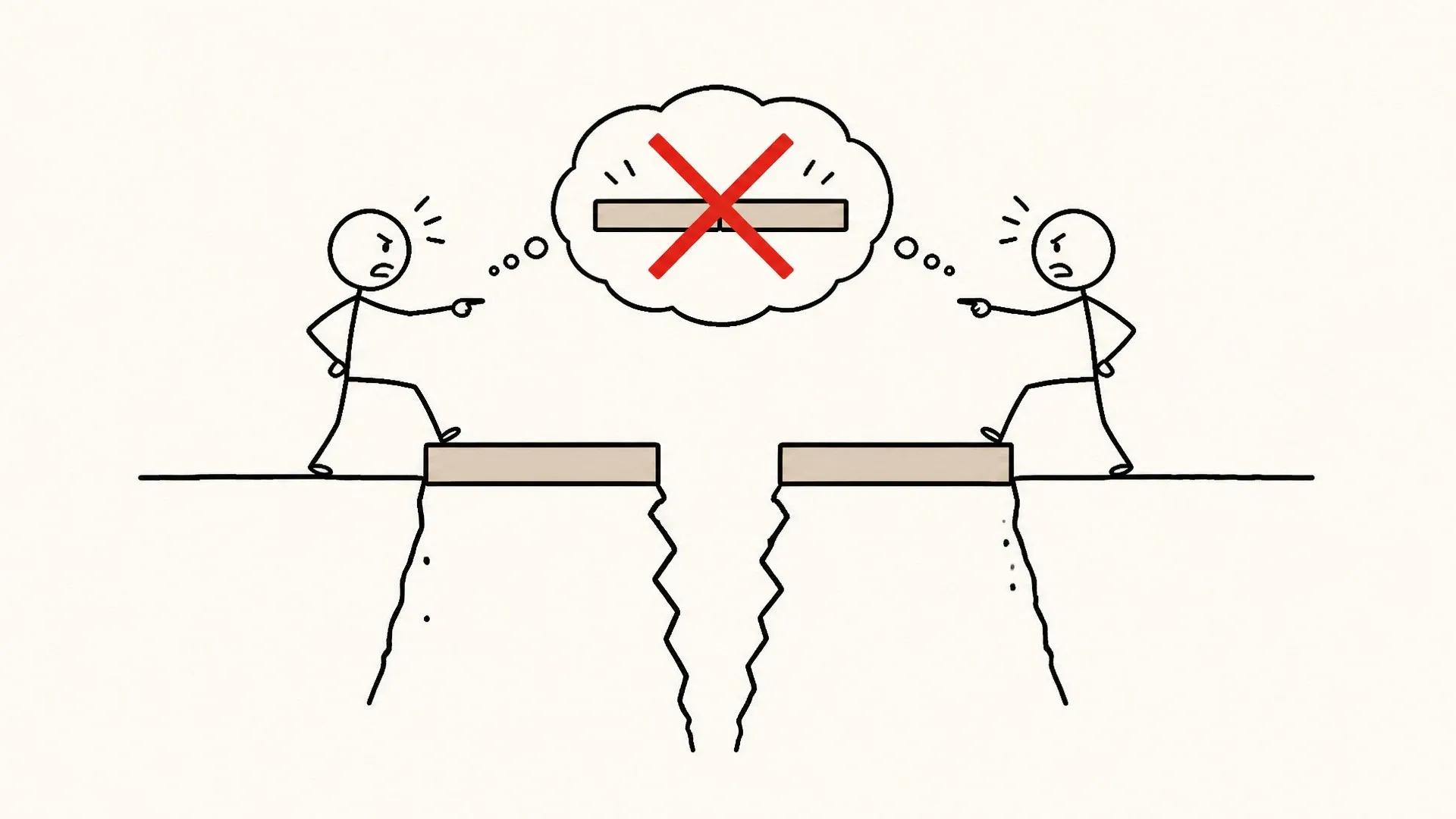
Context matters. Forced or meaningless coordination may do little when participants distrust the activity or the people directing it. A workplace conflict cannot be solved by ordering everyone to clap. Synchrony is most plausible as one ingredient when movement is responsive, the purpose feels shared, and the situation provides other reasons to treat partners as a group.
Cohesion is powerful, not automatically kind
A marching army is cohesive, but that cohesion is not a promise of friendliness toward outsiders. Shared movement may strengthen the identity already present. It can bridge a divide in some settings and sharpen a boundary in others. Greater internal unity is a social effect, not a moral verdict.
This distinction helps explain why coordinated rituals remain common. They turn an abstract claim—“we are together”—into an event the body can verify. Everyone predicts the same beat, adjusts to everyone else, and produces a pattern no isolated participant could create in quite the same way.
That experience does not guarantee friendship or erase disagreement. It offers a smaller and more defensible result: for a moment, strangers become mutually predictable partners in a shared action. Sometimes that embodied success is enough to make the room feel less like a collection of individuals and more like a group.


