Short answer
The answer in plain English
Your skin microbiome is an ecosystem because it contains many organisms living in distinct habitats and affecting one another and their host. Oily follicles, moist folds, and dry surfaces support different communities. Residents compete for nutrients, make chemicals, influence immune responses, and can help exclude invaders. Health depends on context and balance, not on making skin microbe-free.
Why it matters
What to understand
The skin surface is only the exposed edge of a deeper habitat. Hair follicles shelter stable living communities, while oil, moisture, salt, acidity, and body location create microbial neighborhoods. Bacteria, Malassezia fungi, bacteriophages, and Demodex mites can be ordinary residents, yet the same organisms may contribute to disease when barriers, immunity, or community structure change. A microbiome label does not prove that a cosmetic can reset this complex system.
Visual guide
How the pieces fit together


Your skin is a landscape, not a sterile wall
Human skin looks smooth from across a room. Under magnification it becomes a difficult terrain: flattened cells overlap at the surface, hair follicles descend like wells, sweat ducts open through small pores, and sebaceous glands feed oil into selected follicles. Acid, ultraviolet light, drying air, clothing, washing, salt, and constant shedding make the exposed surface a harsh place to live.
Yet bacteria, fungi, viruses, and microscopic mites occupy it. Together with their interactions and the human tissues around them, they form the skin microbiome. The useful comparison is not a uniform film of dirt. It is a connected set of habitats with different resources and conditions.
Oily areas such as the forehead, nose, chest, and upper back favor organisms that can use lipids. Warm, moist folds—including armpits, the groin, inner elbows, and spaces between toes—offer water, salt, and reduced airflow. Dry forearms and palms can contain fewer organisms while supporting a more varied mix. Two sites on one person may be ecologically more different than the same site on two people.
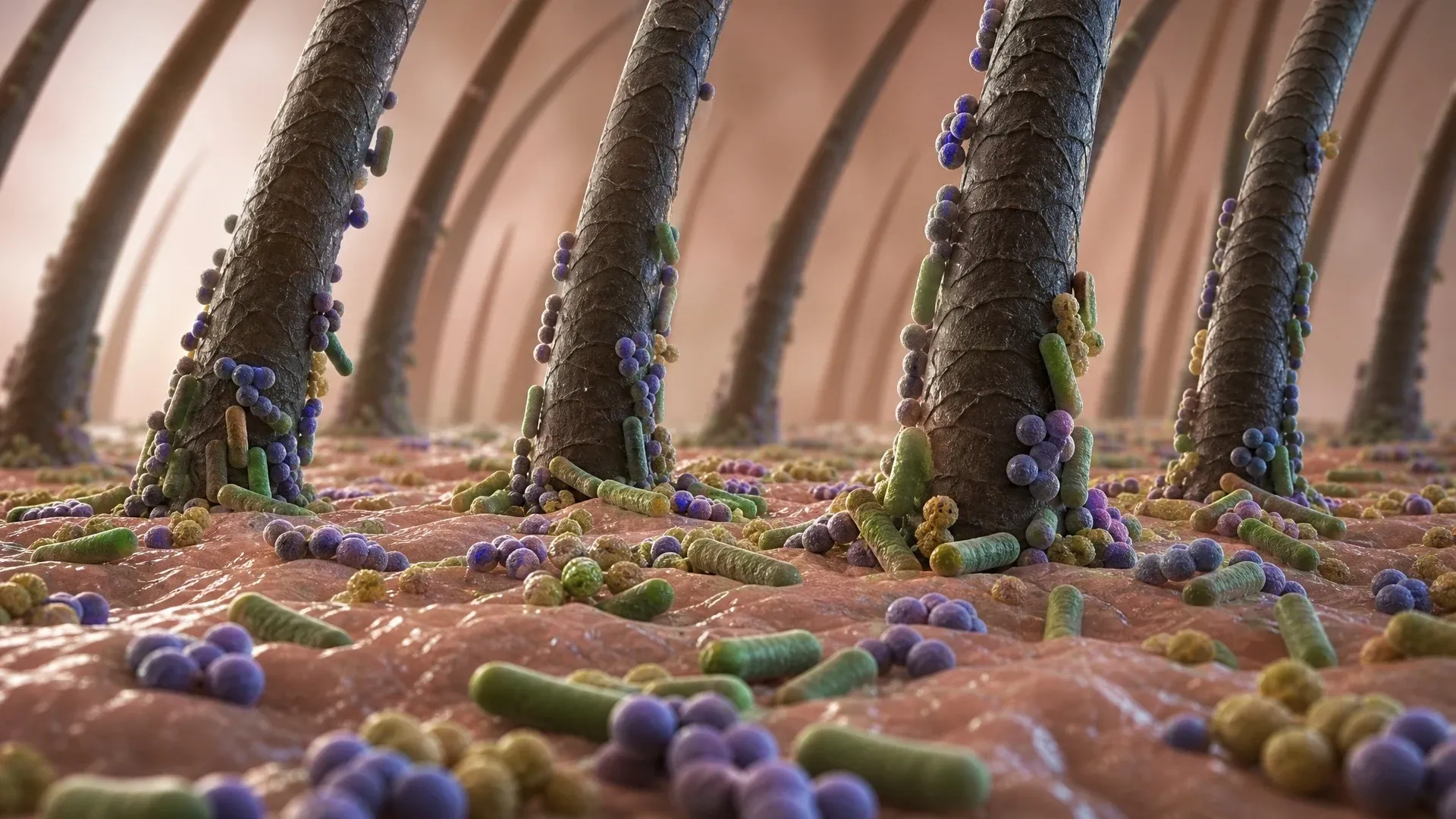
That is why there is no single skin microbiome. There are microbial neighborhoods, each shaped by anatomy, chemistry, and daily exposure.
Much of the living community is below the surface
DNA sampling can make the skin surface appear densely populated, but DNA can remain after a cell has died. Research combining imaging, culture, and sequencing found that surface DNA overrepresents the viable population. Many stable living bacteria are concentrated inside follicles and other protected folds.
This changes how to interpret washing. Cleansing can remove material and organisms from the exposed surface without erasing every resident below it. Microbes sheltered in follicles can remain and help repopulate the area. The microbiome is therefore not simply contamination sitting on top of the body; part of it is embedded in the skin’s physical structure.
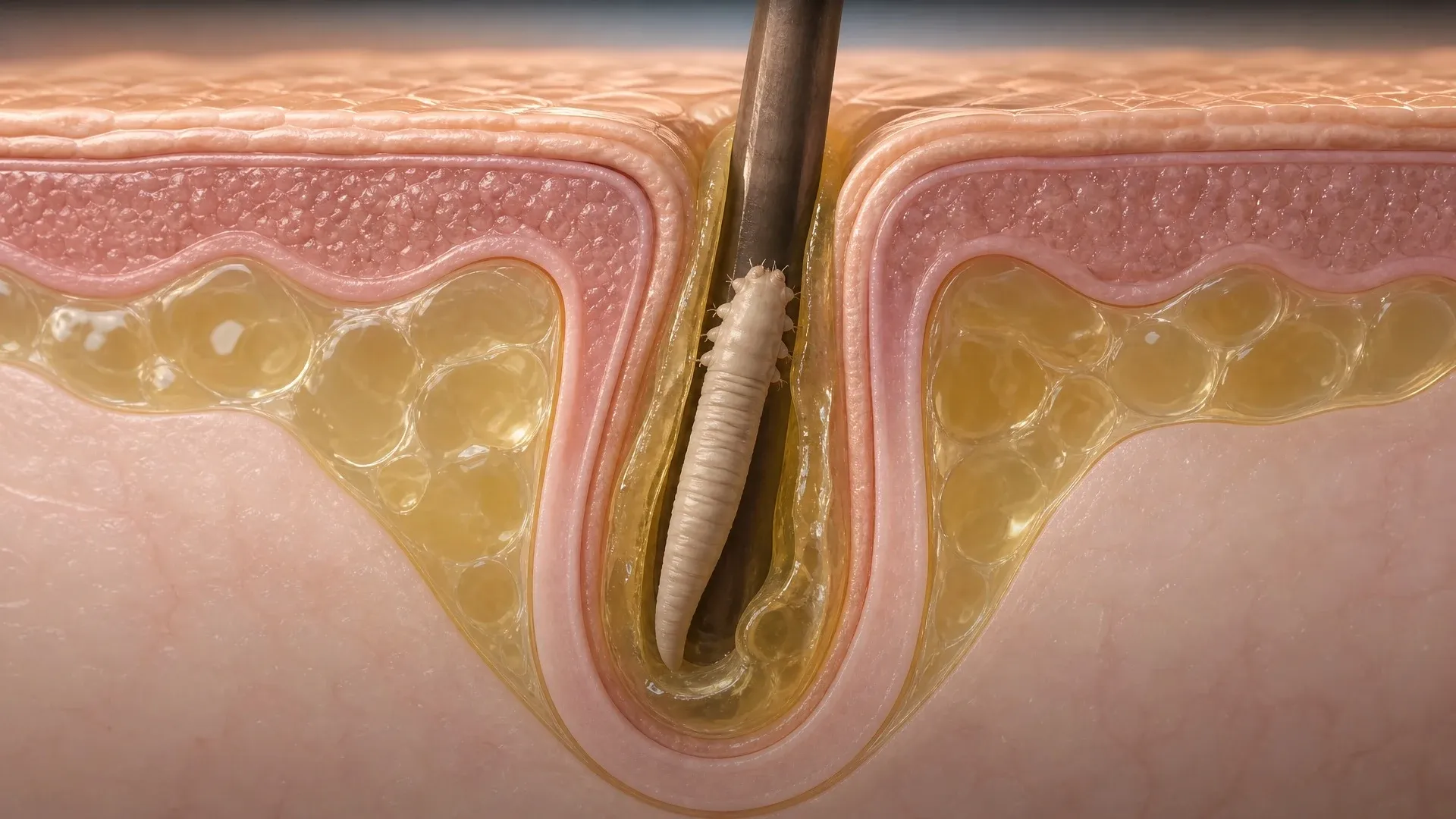
Follicles differ from the surface in oxygen, moisture, available oil, and exposure. Cutibacterium species thrive in many sebum-rich follicles. Staphylococcus and Corynebacterium are common in several moist regions. The exact mix varies by site and person, and a species name alone rarely tells you whether a relationship is helpful or harmful.
Residents can defend the habitat—and cause trouble
Microbes compete for limited space and food. Some common skin bacteria release substances that inhibit rivals. By occupying a niche and consuming its resources, established residents can also make it harder for an invader to take hold. Skin cells, meanwhile, detect microbial signals and adjust immune and barrier responses.
This is not a simple army of good bacteria fighting bad bacteria. Staphylococcus epidermidis can be an ordinary resident on intact skin and a dangerous pathogen if it reaches vulnerable tissue or a medical device. Cutibacterium acnes lives on healthy and acne-prone faces. Acne depends on strain differences, blocked follicles, sebum, inflammation, hormones, and the surrounding community—not merely the presence of one species.
The same context dependence appears in eczema. During some flares, microbial diversity falls while Staphylococcus aureus becomes more dominant. But inflammation and a damaged barrier also create conditions in which that dominance is easier. The altered habitat and altered community may reinforce one another, so cause and consequence are difficult to separate.
Your smell is partly microbial metabolism
Fresh sweat is mostly faint-smelling. Familiar underarm odor appears when bacteria transform compounds in skin secretions into volatile molecules. The result depends on both the chemicals a body supplies and the organisms present to process them. Body odor is therefore a joint product of human glands and microbial metabolism.
That does not mean hygiene is ecologically destructive. Washing removes unwanted material and reduces the transfer of harmful organisms. The relevant goal is sensible hygiene, not preserving every cell and not trying to sterilize healthy skin. Persistent inflammation, crusting around the eyelashes, severe itching, or signs of infection call for medical evaluation rather than a homemade campaign against all microbes.
Fungi and mites can be normal residents
Malassezia yeasts are especially common on oily parts of the scalp, face, chest, and back because they depend on lipids. They can exist uneventfully on healthy skin. Their chemical products and interactions with the barrier and immune system are also associated with dandruff and seborrheic dermatitis. Presence is not the same as diagnosis.
The most visually dramatic residents are Demodex mites. D. folliculorum usually occupies hair follicles around the eyelashes, eyebrows, nose, cheeks, and forehead; D. brevis tends to live deeper in sebaceous glands. These translucent, eight-legged animals are highly specialized for life on humans, and many adults carry them without symptoms.
Genome research shows just how dependent follicular mites have become on their hosts. Their sheltered lifestyle has been accompanied by the loss of genes retained by less specialized relatives. They are not occasional invaders wandering in from a dusty room. For many people, they are long-term residents.
High mite numbers are associated with conditions such as Demodex blepharitis and have been investigated in rosacea. Even then, a magnified mite is not proof of a one-way cause. An inflamed or oily habitat may permit numbers to rise, while a large population may add irritation. Both directions can operate at once.
Viruses and individuality add more layers
Skin also hosts bacteriophages—viruses that infect bacteria rather than human cells. By targeting particular hosts, phages may influence which bacterial strains persist. At pore scale, the ecosystem includes competitors, predators, chemical signals, and protected refuges.
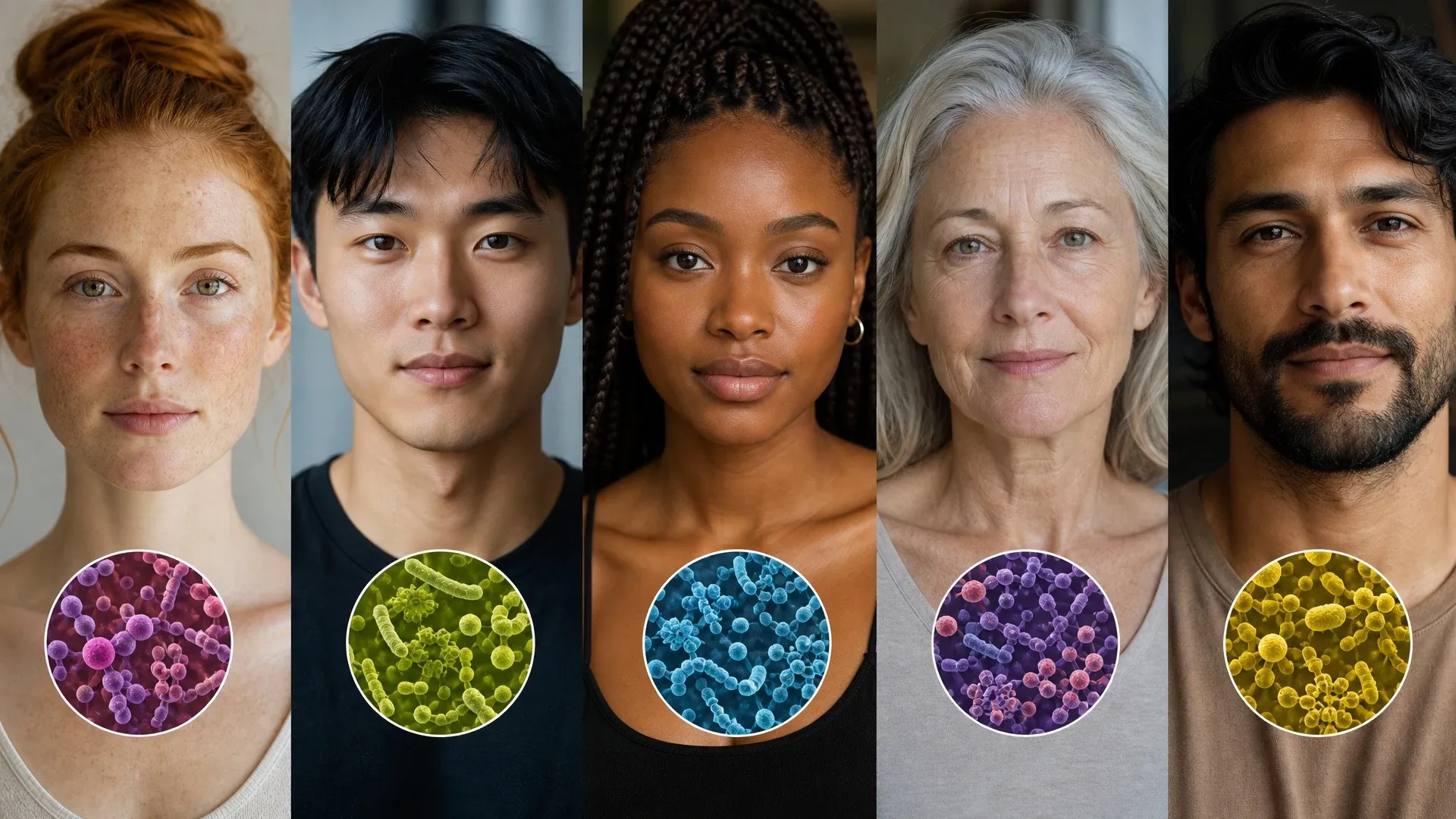
Long-term sampling finds both stability and change. Body location is a strong organizer, but healthy people can retain personal strains and recognizable community patterns over months or years. Birth, puberty, aging, climate, medication, cosmetics, disease, and new environments can still reshape them. Puberty is especially consequential because rising sebum production turns previously quiet follicles into richer habitats for lipid-dependent organisms.
A microbiome claim is not proof of a reset
Skincare companies increasingly promise to balance, feed, protect, or reset the microbiome. Researchers are genuinely studying prebiotics, probiotics, postbiotics, engineered microbes, and phage-based treatments. That active research does not establish one ideal community for every person or prove that any product using the word “microbiome” can create it.
Many cosmetic studies remain small or short. In the United States, cosmetic claims generally are not approved by the FDA before products go on sale. A label should therefore be treated as a claim to examine, not a measurement of ecological repair.
Healthy skin is not empty skin. It is a living boundary whose human cells and microbial residents continually shape one another. The useful question is not how to eliminate that ecosystem, but what keeps its many local relationships compatible with an intact, comfortable barrier.